Elementary School Programs
Fall/Spring Offerings:
Nature Explorers (Kindergarten)
Through outdoor observation in GESC's sensory garden, young learners will practice using their sense of touch, taste, sight, smell, and hearing. Learners will meet some of the animals at GESC to learn how they use their five senses to survive and thrive, and engage in a series of hands-on activities, including making a sensory craft to take home.
Sweet Peas (Kindergarten)
Young scientists will learn the importance of plants by engaging in a series of hands-on activities. Learners will discover that plants are living things that need air, water, nutrients and light in order to live and thrive. Learners will begin to identify plant parts by creating a craft which they can take home. Learners will identify the differences between fruits and vegetables and discover where their food comes
Plants, Pollinators, and Me! (Grades K-2)
Plants, pollinators, and people depend on each other in many ways! Students will investigate these relationships by exploring plant parts, learning about different types of pollinators, observing plants and pollinators in our urban farm, and learning the importance of pollinators through a craft. Young scientists will see firsthand how we are all interconnected!
What's the Buzz About? (Grades K-5)
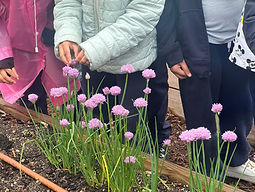
Learn all about bees and the roles they play in the ecosystem, including their important connection to pollination and our food supply. While comparing bees to other insects, discovering their life stages, and learning how and why honey bees make honey, students will explore GESC’s hives and pollinator gardens. Students will encounter a variety of pollinators and engage in a hands-on activity, all while learning how these important animals shape the environment they live in.
Plant Power Jr. (Grades 1 and 2)
Junior scientists will learn about plant parts and how they help with growth, survival and reproduction. Through hands-on learning, they will create a craft that helps them identify the plant parts. Learners will discover that plants are living things and will continue their learning back in the classroom by observing the growth of a seed as it sprouts and grows into a bean plant.
Plant Power (Grades 3-5)
Young scientists will investigate how humans rely on plants in their everyday lives. They will learn how the structures of plant parts support growth, survival and reproduction. Through observation with a series of different plants, students will identify plant adaptations and defense mechanisms for plant survival. The learning will continue back in your classroom with the observation of seed germination, sprouting, and development of a mature plant.
Crazy for Composting (Grades 3-5)
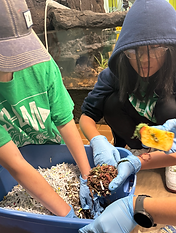
Explore the fascinating world of compost! Learners will discover how compost is made and why it is a component of healthy soil. They will observe the vital organisms that aid in this process and learn what you can and can’t compost through a series of hands-on activities and observation of GESC’s indoor and outdoor compost systems. Students will also see firsthand how GESC uses compost to provide healthy habitats for our animals.
Wonderful World of Water (Grades 3-5)
New York City’s urban ecosystem includes many different kinds of aquatic habitats, such as freshwater ponds, brackish wetlands, and marine coastline, each of which supports unique organisms. Young scientists will explore many of these aquatic habitats here at GESC. Students will view microorganisms using microscopes, learn about NYC’s drinking water supply, and learn how they can conserve water.
Farm to Table (Grades 3-5)
During this six-session partnership, students learn about plants, germination, farming, composting, seed saving, and harvest leafy greens while maintaining their plots on the farm.

Winter Offerings:
Who Lives There? (Kindergarten)
Explore different animal habitats and discover who calls these habitats home. Young learners will investigate different animal habitats, characteristics, and adaptations. Through hands-on activities learners will create a craft they can take home and meet some of the animals at GESC to discover their adaptations needed for survival within their habitats.
Amazing Amphibians (Grades K-2)
Examine LIVE species of amphibians! Identify physical characteristics of frogs and toads and compare them to other animals at GESC to understand their anatomy. Learners will practice observation skills, engage in sensory experiences, and explore adaptations that allow amphibians to survive and thrive in the wild.
Incredible Insects (Grades K-2)
Identify the physical characteristics of insects and discover their various forms, colors and adaptations. Encounter a variety of insects both indoors and outdoors, observe insect behaviors and discover the life stages from eggs to adults. Learners will be introduced to the features that distinguish an insect from other invertebrates and will explore real world scenarios regarding insect management and control to maintain the health of an ecosystem.
Tools of the Trade: Introduction to Scientific Instruments (Grades 3 and 4)
Get a jump start on the skills needed to become a great scientist. Learners will rotate through a series of stations to practice science process skills using GESC’s flora and fauna living-collections.
Weapons of the Wild (Grades 3-5)
Poison, armor, camouflage, oh my! Students will discover how organisms are able to survive and thrive by adapting to their environment in many ways. Through hands-on learning and animal encounters, learners will see firsthand the fascinating ways in which organisms use natural weaponry to defend themselves, hunt prey, or compete for resources to meet their particular needs within an ecosystem.
Eat or Be Eaten (Grades 3-5)
Investigate the predator/prey relationships within an ecosystem. Deconstruct an owl pellet, construct an interactive Muir Web and observe live predator/prey relationships at GESC. Learners will be introduced to the fundamentals of energy transfer as it relates to the food chain and delve into the complicated connections within the food web.
Hydroponics (Grades 4 and 5)
In small groups, students will set up, maintain, monitor, and harvest leafy greens and herbs in their own mini hydroponic system. Students will learn about water chemistry, plant nutrients, healthy eating, data collection, and photosynthesis in action. This program is offered as a six-week partnership.


Year-Round Offerings:
Zoom into Microbiology (Grade 5)
Observe the hidden world of microorganisms. Learners will investigate the micro-world by learning to prepare slides and observe protozoa and algae. Uncover the secret lives of these tiny creatures and how they support plant life. Using microscopes to view organisms harvested at GESC, learners will discover how to harvest their own, be introduced to inquiry-based process skills and tools such as microscopes and slide preparation, and explore the unseen kingdoms of life.
Middle School Programs
Energy in the Ecosystem (Grade 6)
What are consumers? What are decomposers? How is the transfer of energy crucial to support biodiversity of living things? Through an owl pellet dissection students will investigate the key relationships in an ecosystem. Through a series of activities and observations learners will study how different organisms have different energy needs to live.
Zoom into Microbiology (Grades 6-8)
Observe the hidden world of microorganisms. Learners will investigate the micro-world by learning to prepare slides and observe protozoa and algae. Uncover the secret lives of these tiny creatures and how they support plant life. Using microscopes to view organisms harvested at GESC, learners will discover how to harvest their own, utilize inquiry-based process skills and tools such as microscopes and slide preparation, explore the unseen kingdoms of life and focus on cell chemistry and homeostasis.
Inquiry with Isopods (Grades 6-8)
Join us at GESC for an authentic experience as your students practice using the scientific method. Learners will observe and work with live pillbugs, test variables, design an experiment, and test their hypothesis. We promise - no pillbugs will be harmed in this class!
Hydroponics (Grades 6-8)
GESC offers partnership opportunities for middle schools in our state-of-the-art Hydroponics, Aquaculture, and Aquaponics Learning Lab. In small groups, learners will propagate seeds, continually monitor water chemistry, collect data on plant growth, and finally harvest and enjoy their bounty. Not only will learners be fully immersed in the scientific aspect of hydroponics, they will have the opportunity to connect hydroponics to the real-world. As part of this program, students will develop a research question, and set-up their system to complete their investigation. This six-week partnership program is recommended for highly motivated middle school classes. Check back here in mid-fall for the link to apply for a hydroponics partnership program.
![IMG_3520[1].HEIC](https://static.wixstatic.com/media/ff25ea_9c771c0db78946889bc35ab59dc0f8fc~mv2.png/v1/fill/w_353,h_264,al_c,q_85,usm_0.66_1.00_0.01,enc_avif,quality_auto/IMG_3520%5B1%5D_HEIC.png)
High School Summer Internship Opportunities: Urban Naturalists
ESC strives to provide educational, skill-based summer programming for all high school students. It is our hope that participants will learn alongside our urban farmers/animal caregivers and other participants while gaining leadership, organizational, and communication skills as well as hands-on experience with animal care/farm projects and maintenance. ESC expects that participants will have an interest and enthusiasm for learning and working on the farm, greenhouse, apiary, and with the animals. They should be able to manage their time wisely, multi-task efficiently, work well in a team, and follow instructions from their team leader.